
Choosing the right cabinet style transforms your kitchen from ordinary to exceptional. Two cabinet designs dominate modern kitchens Shaker cabinets with their timeless appeal and flat panel designs with their sleek simplicity. Understanding how these styles compare helps Milwaukee, WI homeowners make confident decisions that they’ll love for years to come.
This comprehensive comparison explores every aspect of shaker cabinets vs flat panel designs, from aesthetics and cost to durability and maintenance. Whether you’re drawn to classic elegance or contemporary minimalism, you’ll discover which style best suits your kitchen renovation goals and lifestyle needs.
Let’s dive into the details that make each style unique and help you determine the perfect cabinet design for your home.
Understanding Shaker Cabinet Design
Shaker cabinets originated from the Shaker religious community in 18th century America, where craftsmanship and simplicity were core values. This heritage continues influencing their enduring popularity in modern kitchens.
Classic Design Elements
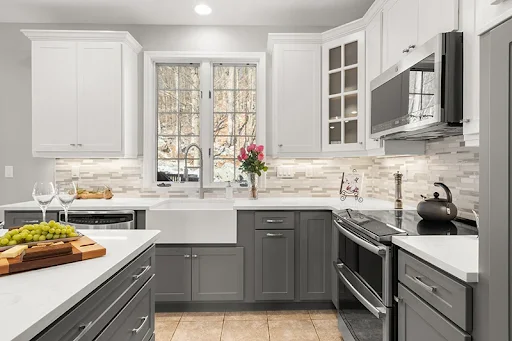
Shaker cabinets feature distinctive five-piece construction with a recessed center panel surrounded by a clean frame. This design creates subtle depth and visual interest without excessive ornamentation. The flat panel doors showcase square edges and minimal detailing, embodying the Shaker philosophy of functional beauty.
The hallmark characteristics include recessed center panels, clean lines, and quality craftsmanship. Each door consists of a center panel and four separate frame pieces, creating dimension while maintaining simplicity. This meticulous construction adds visual interest without overwhelming the space.
Timeless Versatility
One of Shaker cabinets’ greatest strengths lies in their remarkable versatility. They complement both traditional and contemporary kitchen designs seamlessly. The clean lines and minimalist aesthetic allow Shaker cabinets to adapt to changing trends while maintaining their classic appeal.
Milwaukee, WI homeowners appreciate how Shaker cabinets work equally well in historic homes and new construction. Whether paired with farmhouse sinks and butcher block counters or sleek quartz and stainless appliances, Shaker cabinets provide a solid foundation for various design directions.
Material and Finish Options
Shaker cabinets offer extensive customization through different wood species and finishes. Natural wood finishes highlight the grain and warmth of materials like maple, oak, cherry, and hickory. Painted options provide unlimited color possibilities, with white remaining the most popular choice for its bright, timeless appearance.
According to Wikipedia’s information on cabinetry, the Shaker style’s enduring appeal stems from its emphasis on quality craftsmanship and functional design principles that remain relevant today.
Understanding Flat Panel Cabinet Design
Flat door kitchen cabinets, also known as slab cabinets, represent the pinnacle of modern minimalism in kitchen design. These cabinets feature smooth, flat surfaces without raised panels or decorative elements.
Modern Aesthetic Appeal
Flat panel designs create sleek, streamlined appearances that define contemporary and modern kitchen styles. The absence of ornate detailing produces clean, uncluttered looks that emphasize horizontal lines and simplicity. This minimalist aesthetic appeals to homeowners seeking sophisticated, modern environments.
The smooth surfaces of flat door kitchen cabinets provide a blank canvas for creative expression through hardware choices and finish selections. Whether you prefer matte, glossy, or textured finishes, flat panels accommodate various surface treatments to achieve your desired look.
Construction Characteristics
Unlike Shaker cabinets’ five-piece construction, flat panel cabinets typically feature single-piece doors. This simpler construction reduces labor and material costs while creating the signature smooth appearance. The straightforward design emphasizes the quality of materials and finishes rather than decorative elements.
Flat panel cabinets can be constructed from various materials including plywood, MDF (medium-density fiberboard), and solid wood. Each material offers distinct characteristics—plywood provides durability and moisture resistance, MDF delivers smooth surfaces ideal for painted finishes, and solid wood offers natural authenticity.
Contemporary Design Integration
Flat door kitchen cabinets excel in urban, industrial, and contemporary design schemes. They pair beautifully with modern appliances, minimalist hardware, and sleek countertop materials. The clean lines create cohesive looks when combined with other contemporary design elements.
Many Milwaukee, WI homeowners choose flat panels for their ability to make kitchens feel larger and more open. The lack of visual complexity helps smaller spaces feel less cluttered, while the smooth surfaces reflect light beautifully.
Design Aesthetics Comparison
Comparing shaker cabinets vs flat panel designs reveals distinct aesthetic differences that influence overall kitchen character.
Visual Impact and Style
Shaker cabinets balance simplicity with visual interest through their recessed panels and frame construction. They add subtle dimension and shadow lines that create depth without overwhelming spaces. This balanced approach makes Shaker cabinets feel substantial yet refined.
Flat door kitchen cabinets take minimalism further with their completely smooth surfaces. They create bold, uninterrupted expanses that emphasize horizontal lines and geometric simplicity. This extreme simplicity makes strong design statements in contemporary spaces.
Versatility Across Design Styles
Shaker cabinets demonstrate remarkable versatility, working beautifully in traditional, transitional, farmhouse, contemporary, and even modern kitchens. Their balanced design adapts to various aesthetics through finish and hardware choices. This flexibility makes Shaker cabinets the safer choice for homeowners uncertain about long-term style preferences.
Flat panel designs work best in modern, contemporary, industrial, and minimalist kitchens. While stunning in these settings, they may feel out of place in traditional or rustic designs. Their strong aesthetic commitment requires homeowners to embrace contemporary styling throughout their kitchens.
Creating Visual Interest
Shaker cabinets create interest through their frame-and-panel construction, casting subtle shadows that add dimension. Hardware placement, wood grain visibility, and finish choices provide additional customization opportunities. The recessed panels give walls of cabinetry visual relief that prevents monotony.
Flat door kitchen cabinets rely more heavily on finish quality, color selection, and hardware choices to create interest. The smooth surfaces highlight material quality and craftsmanship. Many homeowners incorporate two-tone color schemes or mix materials to add visual variety with flat panels.
Hardware Compatibility
Both styles accommodate various hardware options, though with different effects. Shaker cabinets look beautiful with traditional knobs, contemporary pulls, or even no visible hardware. The frame provides natural locations for hardware placement that always looks intentional.
Flat panel cabinets offer more flexibility in hardware placement since there’s no frame to work around. Integrated pulls, edge pulls, and push-to-open mechanisms work particularly well with flat door kitchen cabinets, maintaining their sleek, uninterrupted appearance.
Cost Considerations
Understanding the financial differences between shaker cabinets vs flat panel helps you budget appropriately for your Milwaukee, WI kitchen renovation.
Material Costs
Shaker cabinets generally cost more due to their five-piece construction requiring additional materials and labor. The frame pieces, center panel, and joinery all add to material expenses. Prices typically range from $150-$650 per linear foot for semi-custom Shaker cabinets depending on materials and finishes.
Flat door kitchen cabinets offer more economical options due to simpler construction. Single-piece doors require less material and labor to manufacture, resulting in lower production costs. Flat panels typically range from $125-$550 per linear foot for comparable quality levels.
Labor and Installation
The complexity of Shaker cabinet construction translates to higher fabrication costs. Creating the frame-and-panel doors requires additional cutting, routing, and assembly steps. However, installation costs remain similar between both styles since mounting procedures don’t differ significantly.
Flat panel cabinets’ simpler construction reduces fabrication time and associated labor costs. This efficiency allows manufacturers to offer competitive pricing while maintaining quality standards. The savings become more noticeable in larger kitchen projects requiring extensive cabinetry.
Long-Term Value
Both styles maintain good resale value when well-maintained, though Shaker cabinets’ broader appeal may attract more potential buyers. Their versatility ensures they won’t feel dated as quickly as strongly contemporary designs might. This timelessness can translate to better long-term investment value.
Flat door kitchen cabinets appeal strongly to buyers seeking modern aesthetics. In contemporary homes or urban markets, they may actually command premiums. However, in markets favoring traditional styles, they might limit buyer appeal compared to more versatile Shaker designs.
Budget-Friendly Options
For budget-conscious Milwaukee, WI homeowners, flat panel cabinets offer an attractive entry point into quality cabinetry. Stock flat panel options from reputable manufacturers provide modern styling at accessible prices. Semi-custom options like those available through various cabinet lines offer good value with moderate customization.
Shaker cabinets, while typically pricier, justify their cost through versatility and timeless appeal. Mid-range Shaker options balance quality and affordability, providing classic styling that adapts to changing décor preferences over time.
Durability and Construction Quality
Both cabinet styles can deliver excellent durability when properly constructed with quality materials.
Construction Methods
Shaker cabinets’ five-piece construction creates inherently strong doors. The frame-and-panel design allows for wood movement while maintaining structural integrity. Quality joinery techniques like mortise-and-tenon or dowel construction ensure long-lasting performance.
Flat door kitchen cabinets rely on material quality and edge treatment for durability. Solid wood or high-quality plywood provides excellent longevity, while lower-grade materials may show wear more quickly. The simpler construction means there are fewer joints that could fail over time.
Resistance to Wear and Tear
Shaker cabinets’ frames provide natural protection for center panels. The raised frame edges help prevent direct impact damage to the panel surfaces. This design characteristic helps Shaker cabinets maintain their appearance through years of daily use.
Flat panel surfaces, lacking protective frames, may show scratches, dents, and wear more readily. Every impact directly affects the visible surface. Choosing high-quality materials and durable finishes becomes especially important with flat door kitchen cabinets to ensure long-term appearance retention.
Moisture and Environmental Factors
Both styles handle moisture similarly when constructed with appropriate materials. Plywood construction resists warping better than solid wood in Milwaukee, WI’s variable humidity conditions. Proper sealing and finishing protect both Shaker and flat panel cabinets from moisture damage.
The simpler construction of flat panels means fewer seams where moisture might penetrate. However, exposed edges require proper sealing to prevent swelling or delamination. Quality manufacturers address these concerns through proper edge banding and finishing techniques.
Maintenance and Cleaning
Daily maintenance requirements differ slightly between shaker cabinets vs flat panel designs, affecting long-term ownership experience.
Cleaning Ease
Flat door kitchen cabinets excel in cleaning convenience. Their smooth, flat surfaces allow quick wiping with minimal effort. There are no crevices, grooves, or recessed areas where dirt and grease accumulate. A simple wipe-down with appropriate cleaners keeps flat panels looking pristine.
Shaker cabinets require slightly more attention during cleaning. The recessed center panels create areas where dust, grease, and grime collect over time. Regular attention to these crevices maintains the cabinets’ appearance. However, many homeowners find this minor additional effort worthwhile given Shaker cabinets’ aesthetic advantages.
Long-Term Maintenance
Both styles benefit from regular cleaning with appropriate products. Harsh chemicals can damage finishes regardless of cabinet style. Using mild, pH-neutral cleaners and soft cloths protects both Shaker and flat panel finishes.
Painted finishes on either style may require touch-ups over years of use. Natural wood finishes might need occasional reconditioning with appropriate wood care products. The maintenance requirements depend more on finish choice than cabinet style.
Repair and Refinishing
Shaker cabinets’ frame-and-panel construction sometimes allows easier repairs. If a center panel becomes damaged, it may be replaceable without replacing the entire door. The frame can often be refinished separately from panels.
Flat door kitchen cabinets typically require full door replacement if significantly damaged since they’re single-piece construction. However, their simpler design often makes replacements more affordable. Surface repairs may be more challenging on flat panels since any imperfection shows clearly on smooth surfaces.
Customization and Design Flexibility
Both styles offer customization opportunities, though in different ways.
Finish Options for Shaker Cabinets
Shaker cabinets look beautiful in virtually any finish. Natural wood stains highlight grain patterns while maintaining the style’s classic character. Painted finishes work equally well, with white, gray, navy, and sage being popular Milwaukee, WI choices. The frame-and-panel design looks intentional regardless of finish selection.
Glazing and distressing techniques add character to Shaker cabinets without overwhelming their clean lines. These decorative treatments enhance the traditional appeal while maintaining the style’s fundamental simplicity.
Finish Options for Flat Panel Cabinets
Flat door kitchen cabinets showcase finish quality prominently due to their smooth surfaces. High-gloss finishes create dramatic, reflective appearances perfect for modern designs. Matte finishes provide sophisticated, understated elegance. Textured finishes add subtle interest while maintaining contemporary aesthetics.
Wood veneer flat panels offer natural beauty with modern simplicity. The grain patterns become focal points on the uninterrupted surfaces. Exotic wood veneers create striking appearances that emphasize material beauty.
Hardware Integration
Shaker cabinets accommodate traditional knobs, contemporary pulls, cup pulls, and integrated handles. The frame provides natural mounting points that always look appropriate. Hardware becomes an easy way to update appearances without replacing cabinets.
Flat door kitchen cabinets work beautifully with minimal, integrated hardware that maintains clean lines. Edge pulls, finger pulls, and push-to-open mechanisms preserve the sleek aesthetic. When using knobs or pulls, their style becomes more prominent against the simple background.
Mixing Styles
Some Milwaukee, WI homeowners successfully mix shaker cabinets vs flat panel designs in single kitchens. Perhaps Shaker cabinets on perimeter walls with flat panel islands create interesting contrast. This approach requires careful planning to ensure cohesion rather than confusion.
According to kitchen design principles, successful mixing requires thoughtful color coordination and intentional design choices that create balance rather than competing styles.
Best Applications and Ideal Settings
Each style shines in particular contexts and design schemes.
When Shaker Cabinets Excel
Shaker cabinets work beautifully in traditional kitchens where classic elegance matters. They complement farmhouse sinks, natural materials, and timeless design elements. Their versatility also serves transitional kitchens that blend traditional and contemporary elements.
In historic Milwaukee, WI homes, Shaker cabinets respect architectural heritage while providing modern functionality. They update older kitchens without creating jarring style conflicts. Even in contemporary settings, Shaker cabinets add warmth and character that pure modernism sometimes lacks.
When Flat Panel Cabinets Excel
Flat door kitchen cabinets dominate modern and contemporary kitchens where clean lines and minimalism rule. They pair perfectly with industrial elements like exposed brick, concrete counters, and stainless steel appliances. The sleek surfaces complement geometric tile patterns and minimalist fixtures.
In smaller Milwaukee, WI kitchens, flat panels help spaces feel larger and less cluttered. The visual simplicity prevents overwhelming compact areas. Urban condos and modern townhomes particularly benefit from flat panel aesthetics.
Mixed Applications
Some homeowners use both styles strategically within homes. Perhaps flat door kitchen cabinets in the main kitchen with Shaker cabinets in a butler’s pantry or mudroom. This approach allows contemporary main spaces while maintaining traditional character in supporting areas.
Making Your Decision
Choosing between shaker cabinets vs flat panel requires careful consideration of multiple factors affecting your Milwaukee, WI kitchen.
Assessing Your Home’s Style
Consider your home’s overall architectural style and existing design elements. Traditional homes often look more cohesive with Shaker cabinets, while contemporary construction suits flat panels naturally. However, intentional contrast can create interesting visual statements when thoughtfully executed.
Considering Long-Term Plans
If you plan to stay in your home long-term, choose the style you genuinely love. Your daily enjoyment matters more than hypothetical future buyers’ preferences. However, if selling within a few years, consider your market’s preferences and which style appeals to broader audiences.
Budget Alignment
Determine whether the cost difference between shaker cabinets vs flat panel significantly impacts your overall budget. Remember to factor in the complete project cost including countertops, flooring, appliances, and installation. Sometimes the cabinet cost difference becomes less significant within total renovation expenses.
Maintenance Preferences
Honestly assess your cleaning habits and tolerance for maintenance. If you prefer absolute simplicity in cleaning, flat door kitchen cabinets offer advantages. If minor additional cleaning effort doesn’t concern you, don’t let it eliminate Shaker cabinets from consideration.
Working with Professionals
Consult with experienced kitchen designers serving Milwaukee, WI who understand both styles’ nuances. They can show you examples in various settings and help visualize how each would look in your specific space. Many cabinet showrooms display both styles, allowing direct comparison.
Quality cabinet suppliers offer extensive selections of both Shaker and flat panel options. Seeing actual cabinet samples, opening doors, and examining construction quality helps you make informed decisions beyond just viewing photos.
Popular Choices in Milwaukee, WI
Understanding local preferences helps you make decisions that align with your market while reflecting your personal style.
Current Trends
Milwaukee, WI homeowners currently favor Shaker cabinets for their versatility and timeless appeal. The style’s ability to work in both historic renovations and new construction makes it consistently popular. White and gray Shaker cabinets dominate kitchen renovations throughout the area.
Flat door kitchen cabinets are gaining traction in urban developments and contemporary home renovations. Modern townhomes and condos in Milwaukee increasingly feature sleek flat panel designs that complement industrial-chic aesthetics popular in converted buildings.
Regional Considerations
Wisconsin’s climate influences cabinet durability needs. Variable humidity levels throughout seasons make quality construction and proper sealing important regardless of style choice. Both Shaker and flat panel cabinets perform well when properly constructed with moisture-resistant materials.
The blend of historic and modern architecture throughout Milwaukee, WI means both styles remain relevant and marketable. Your neighborhood’s character might influence which style feels most appropriate for your home.
Frequently Asked Questions
Can I Mix Shaker and Flat Panel Cabinets in One Kitchen?
Yes, you can successfully mix shaker cabinets vs flat panel in single kitchens with careful planning. Many homeowners use Shaker cabinets on perimeter walls with flat panel islands, or vice versa. This creates visual interest while maintaining cohesion through coordinated colors and finishes. The key is intentional design rather than random mixing—work with designers to ensure the combination feels purposeful.
Which Style Is Better for Resale Value?
Shaker cabinets typically offer broader buyer appeal due to their versatility across design styles. However, in contemporary markets or urban settings, flat door kitchen cabinets may attract premium prices from buyers seeking modern aesthetics. Quality matters more than style—well-constructed cabinets in either style add value. Consider your specific Milwaukee, WI market and work with real estate professionals for local insights.
Do Flat Panel Cabinets Require More Frequent Replacement?
Not necessarily. Flat door kitchen cabinets can last just as long as Shaker cabinets when constructed with quality materials and proper finishes. However, visible wear on smooth surfaces may become apparent sooner than on Shaker cabinets where frames provide some protection. Choose high-quality materials and durable finishes to maximize longevity regardless of style. Proper maintenance extends the life of both cabinet types significantly.