
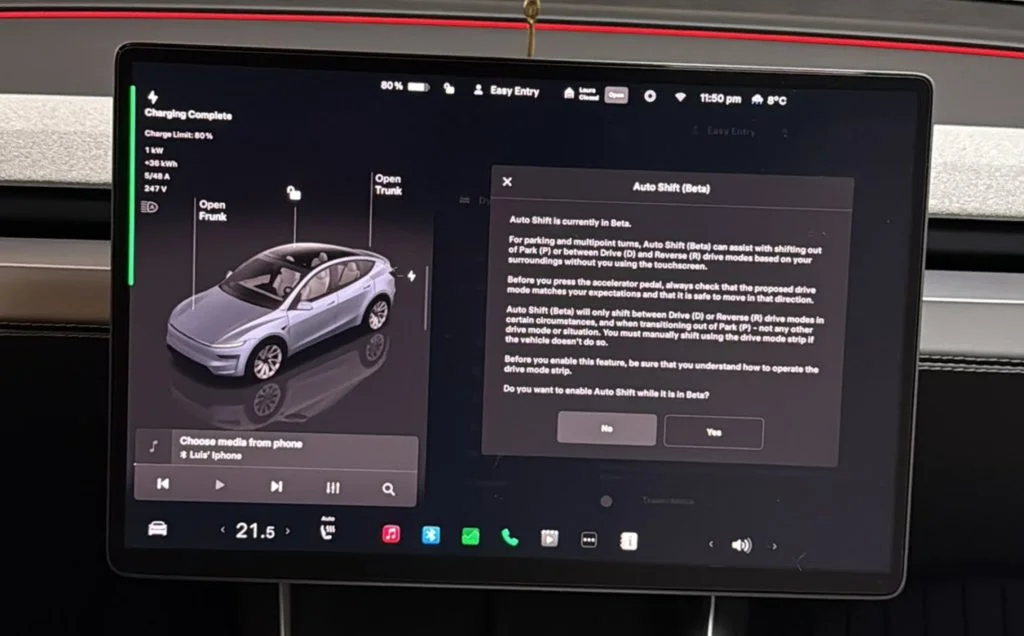
Let’s be honest most cars start losing value the moment you drive them off the lot. But Tesla flipped that entire idea upside down. Instead of aging like milk, Tesla vehicles age more like fine wine. Why? Because of over-the-air (OTA) software updates that continuously improve your car long after purchase.
Think about it for a second. When was the last time your traditional car manufacturer added new features to your vehicle without you stepping into a service center? Probably never. Tesla, on the other hand, treats its cars like smartphones on wheels. Every update can bring new features, better performance, and even improved safety systems.
The 2026 software update rollout is a perfect example of this philosophy in action. Tesla isn’t just fixing bugs; it’s redefining what your car can do. From artificial intelligence to advanced driving automation, the update shows how software is becoming the heart and soul of modern vehicles.
What makes this even more exciting is how seamless it feels. You wake up one morning, and suddenly your car can do things it couldn’t do the night before. That kind of transformation is not just impressive it’s revolutionary.
The Evolution of Software-Defined Vehicles
We’re living in an era where hardware is no longer the star of the show software is. Tesla has been leading this shift for years, turning vehicles into software-defined machines. In simple terms, the physical car remains the same, but its capabilities evolve through code.
Imagine buying a laptop that gets faster, smarter, and more capable every few months without changing any components. That’s essentially what Tesla is doing with cars. The 2026 update pushes this concept even further by integrating AI at a deeper level than ever before.
This shift is also changing how people think about ownership. You’re not just buying a car—you’re investing in a platform that grows over time. It’s like owning a device that never becomes outdated because it keeps upgrading itself.
And let’s not ignore the psychological impact. Owners feel like they’re part of something dynamic, something evolving. That emotional connection is something traditional automakers are still struggling to replicate.
Overview of the Latest Tesla Software Update (2026)
Tesla’s latest rollout revolves around two major versions: 2026.2.6 and 2026.2.9. While both updates bring improvements, they focus on slightly different areas, creating a layered upgrade experience.
Version 2026.2.6 is heavily centered on AI integration and user interaction. This is where Grok AI enters the scene, bringing conversational intelligence to Tesla vehicles. It also includes enhancements to navigation, safety alerts, and general usability.
On the other hand, 2026.2.9 focuses more on refining Tesla’s driving systems and automation features. It introduces updates to Full Self-Driving (FSD), tweaks to Autopilot branding, and improvements in how the car behaves in real-world driving scenarios.
Together, these updates represent a balanced combination of intelligence and functionality. It’s not just about adding flashy features; it’s about making the entire driving experience smoother, safer, and more intuitive.
Read More : Tesla Update 2026.8 Lets You See Who’s Driving in the Tesla App
Tesla’s Phased Global Rollout Strategy
Tesla doesn’t believe in “one-size-fits-all” when it comes to updates. Instead, it uses a phased rollout strategy, which means not every vehicle receives the update at the same time.
Why does Tesla do this? Simple it reduces risk. By releasing updates gradually, Tesla can monitor performance, identify issues, and fix bugs before a global release. It’s like testing a new recipe on a small group before serving it to the entire restaurant.
Another factor is regional regulation. Some features, especially those related to autonomous driving, require approval from local authorities. That’s why certain features might appear in the US before reaching Europe or Asia.
Hardware compatibility also plays a role. Newer Tesla models with advanced processors may receive features that older models cannot support. This ensures that performance remains smooth and reliable across all vehicles.
Major Features Introduced
Grok AI Integration
One of the biggest highlights of the 2026 update is Grok AI, Tesla’s next-generation conversational assistant. This isn’t just a voice command system it’s an intelligent companion that understands context and intent.
Picture this: instead of tapping through menus, you simply talk to your car. You can ask it to find restaurants, adjust routes, or even suggest stops based on your preferences. It feels less like using a machine and more like having a conversation.
This is a huge leap forward because it reduces distractions. Instead of taking your eyes off the road, you can interact naturally. And the more you use it, the better it understands your habits and preferences.
Voice Interaction Like Never Before
Grok AI transforms voice interaction into something truly intuitive. You’re no longer limited to rigid commands. You can speak naturally, just like you would with another person.
For example:
- “Take me to the nearest gas station with coffee.”
- “Avoid traffic and find a faster route.”
- “Add a stop for groceries on the way home.”
The system processes these requests in real time, making adjustments instantly. It’s like having a co-pilot who’s always paying attention.
Full Self-Driving (FSD) Improvements
Tesla continues to refine its Full Self-Driving (Supervised) system, bringing it closer to true autonomy.
The 2026 update enhances how the car navigates complex environments, including urban streets, highways, and parking areas. The system now makes smoother decisions, reducing sudden braking or awkward lane changes.
Smarter arrival and Parking Intelligence
One of the most intriguing additions is improved arrival behavior. The car doesn’t just get you to your destination. It understands how to finish the journey.
Whether it’s pulling into a driveway, stopping at a curb, or navigating a parking lot, the system handles the final steps with more precision. It’s a small detail, but it makes the experience feel complete.
Autopilot Rebranding and UX Changes
Tesla has also updated the naming of several features. While this might seem cosmetic, it actually improves clarity for users.
For instance:
- “Navigate on Autopilot” → “Navigate on Autosteer.”
- “FSD Computer” → “AI Computer”
These changes help users better understand what each feature does, reducing confusion and setting more realistic expectations.
Safety Enhancements
Child Left-Alone Detection System
Safety is where Tesla truly shines, and the 2026 update introduces a critical feature: child left-alone detection.
Using sensors and cabin monitoring systems, the car can detect if someone—especially a child—is left inside. If this happens, the vehicle sends alerts to the owner and can take additional steps to ensure safety.
This feature addresses a real-world problem that has led to tragic incidents in the past. It’s not just a technological upgrade it’s a life-saving innovation.
Enhanced Emergency Vehicle Response
The update also improves how Tesla vehicles respond to emergency situations. The system can now better detect sirens and flashing lights, allowing the car to yield appropriately.
This makes driving safer not just for Tesla owners but for everyone on the road. It’s another example of how software can enhance real-world safety.
User Experience Upgrades
Improved Supercharger Navigation
Tesla has upgraded its Supercharger navigation system, making it easier to plan long trips.
Drivers can now see:
- Charging station layouts
- Stall availability
- Nearby amenities
This reduces uncertainty and makes road trips more enjoyable.
Smart Charging and Convenience Features
Small details can make a big difference. Features like automatic cable release simplify everyday interactions with the car.
These improvements might not grab headlines, but they enhance daily usability in meaningful ways.
Performance and AI Enhancements
Neural Network Advancements
Tesla’s neural networks have been upgraded to improve perception and decision-making. The car can now better understand its surroundings, from pedestrians to road signs.
This leads to smoother driving and fewer errors, especially in complex environments.
Driving Behavior Customization Modes
New driving modes allow users to customize how the car behaves. Whether you prefer a relaxed ride or a more aggressive driving style, Tesla gives you control.
It’s like choosing between a calm cruise and a sporty sprint your car adapts to your mood
Regional Differences and Compatibility
Tesla does not release software updates uniformly across the globe. Instead, it adjusts feature availability based on regional laws, infrastructure readiness, and market-specific requirements. While version 2026.8 is rolling out globally, not every feature becomes available at the same time or in every country.
Tesla operates in highly regulated environments where governments control what vehicle features are allowed, especially those related to automation, safety systems, and data handling. For example, features related to advanced driver assistance or automated responses may face delays in regions with stricter regulatory approval processes.
In practical terms, this means a driver in North America might receive a feature weeks or even months before someone in Europe or Asia. Tesla uses region-specific software configurations, allowing it to enable or disable features dynamically without requiring separate hardware builds. This flexible deployment model helps Tesla scale globally while staying compliant with local laws.
Hardware Limitations and Requirements
Not all Tesla vehicles support every feature introduced in new updates. While Tesla delivers software improvements across its fleet, some advanced capabilities require newer hardware.
Tesla vehicles are built on different hardware platforms, commonly referred to as HW2.5, HW3, and newer AI-based systems. Each generation includes improvements in:
- Processing power
- Sensor integration
- AI inference capabilities
For example, features like improved braking algorithms or safety detection systems rely on real-time data processing. Newer vehicles, such as the updated
Tesla Model Y, include enhanced hardware like dual master cylinders and more advanced control systems, allowing them to support features like Comfort Braking more effectively.
Older vehicles can still receive updates, but they may not support:
- Advanced AI features
- High-frequency sensor processing
- Complex real-time decision-making
This creates a tiered experience where newer models benefit more from software advancements.
Benefits for Tesla Owners
One of the biggest advantages of owning a Tesla is the continuous improvement delivered through software updates. Unlike traditional vehicles, where features remain fixed after purchase, Tesla treats its cars as evolving platforms.
With updates like 2026.8, Tesla owners gain:
1. Improved Driving Experience
Features like Comfort Braking directly enhance daily driving by making the vehicle smoother and more predictable.
2. Enhanced Safety
New systems, such as blind spot monitoring in the
Tesla Cybertruck, reduce real-world risks that drivers face regularly.
3. Better Software Usability
UI improvements, voice assistant upgrades, and media controls make the system easier to use.
4. Long-Term Value
Tesla vehicles retain value better because they improve over time. A car purchased today may have significantly better features a year later without any additional cost.
This model effectively turns a Tesla into a software-driven product that evolves continuously, similar to a smartphone.
Challenges and Real-World Limitations
Despite these advancements, Tesla’s technology is not without limitations. While software updates improve performance and safety, they do not eliminate the need for human involvement.
1. Driver Supervision Is Still Required
Even with advanced systems, Tesla vehicles are not fully autonomous. Drivers must remain attentive and ready to take control at any time.
2. Environmental Limitations
Sensors and AI systems can be affected by:
- Poor weather conditions
- Low visibility
- Complex urban environments
3. Hardware Constraints
Older vehicles may not fully benefit from newer updates due to limited processing power or sensor capabilities.
4. Software Variability
Because Tesla uses staged rollouts, some users may experience bugs or inconsistencies during early deployment phases.
These limitations highlight an important point:
Tesla’s system is advanced, but it is still evolving.
The Future of Tesla Software Ecosystem
Tesla is clearly moving toward a future dominated by artificial intelligence, automation, and software-defined mobility. Each update, including 2026.8, brings incremental progress toward this goal.
AI-Driven Development
Tesla collects billions of miles of real-world driving data, which it uses to train its AI systems. This allows continuous improvement in:
- Object detection
- Driving decisions
- Safety responses
Toward Full Autonomy
While full self-driving is not yet fully realized, Tesla is gradually building the foundation through:
- Better sensor integration
- Smarter control algorithms
- Continuous OTA improvements
Software as the Core Platform
Tesla vehicles are becoming more like computing platforms on wheels. Future updates may include:
- More advanced AI assistants
- Deeper integration with smart ecosystems
- Expanded automation capabilities
Long-Term Vision
Tesla’s long-term goal is clear:
Create vehicles that improve automatically through software and eventually operate with minimal human input.
Conclusion
The 2026.8 update clearly shows how Tesla continues to redefine what it means to own a modern vehicle. Instead of treating a car as a finished product at the time of purchase, Tesla treats it as an evolving platform that improves continuously through software. This shift is not just a technical upgrade—it represents a fundamental change in the automotive industry.
With this update, Tesla focuses on real-world improvements that drivers experience every day. Features like Comfort Braking refine how the vehicle behaves in traffic, making stops smoother and more natural. At the same time, safety enhancements such as the parked blind spot warning in the Tesla Cybertruck address practical risks that often go unnoticed but can lead to serious accidents. These are not experimental features; they are targeted improvements based on real driving behavior and user feedback.
FAQs
1. What is included in Tesla 2026.8 software update?
The 2026.8 update from Tesla includes a mix of driving, safety, and software improvements. Key features include:
- Comfort Braking for smoother stops
- Blind Spot Warning While Parked for Cybertruck
- Spotify and navigation UI improvements
- New voice option for Grok AI
- Security updates in version 2026.8.3
2. Which Tesla models support the 2026.8 update?
The update is rolling out across multiple models, including:
- Tesla Model 3
- Tesla Model Y
- Tesla Model S
- Tesla Cybertruck
However, some features are limited to newer models, such as Comfort Braking in 2025+ Model
3. What is Comfort Braking in Tesla?
Comfort Braking is a feature that improves how the vehicle slows down at low speeds. It makes braking smoother by optimizing the transition between regenerative braking and traditional braking systems. This results in a more natural and comfortable stopping experience.
4. What is the Cybertruck blind spot feature while parked?
This feature prevents accidents when opening doors. If the
Tesla Cybertruck detects an object in the blind spot, it:
- Shows a warning light
- Plays a sound alert
- Stops the door from opening on first attempt
The driver can override it if needed.
5. How do I get the Tesla 2026.8 update?
You can check for the update through your Tesla app or vehicle screen:
- Go to Controls → Software
- Check if the update is available
- Set update preference to “Advanced” for faster access
Tesla releases updates in phases, so availability may vary.
6. Why haven’t I received the 2026.8 update yet?
Tesla rolls out updates gradually. If you haven’t received it yet, it could be due to:
- Your region
- Vehicle model or hardware
- Staged rollout schedule
Most users receive updates within a few weeks.
7. What is Tesla 2026.8.3 update?
Version 2026.8.3 is a point update focused on:
- Security improvements
- Bug fixes
- System stability
It does not introduce major new features but improves overall performance.
8. Are Tesla software updates free?
Yes, most Tesla software updates are free. They are delivered over the air and improve the vehicle without requiring any physical upgrade.
9. Are all features available in every country?
No, feature availability depends on:
- Local regulations
- Infrastructure
- Regional approvals
Some features may roll out later in certain regions.
10. Is Tesla fully self-driving after this update?
No, Tesla vehicles still require driver supervision. While updates improve automation and safety, full autonomy is not yet available. Drivers must stay alert and ready to take control.