Imagine a fraudster using Agentic AI to launch a deepfake voice attack: An Agentic AI agent mimics your CEO perfectly—same tone, pauses, and even breathing—and tricks an employee into wiring millions instantly. This nightmare is real and exploding. In 2024-2025, contact centres lost $12.5 billion to fraud, with deepfake attempts surging over 1,300% in recent years and projections showing a further +162% rise in deepfake fraud.
As Agentic AI powers autonomous decisions—handling calls, payments, and workflows with minimal human input—fraudsters exploit the same technology for scaled, machine-led scams: synthetic voices, identity spoofing, and unstoppable impersonation.
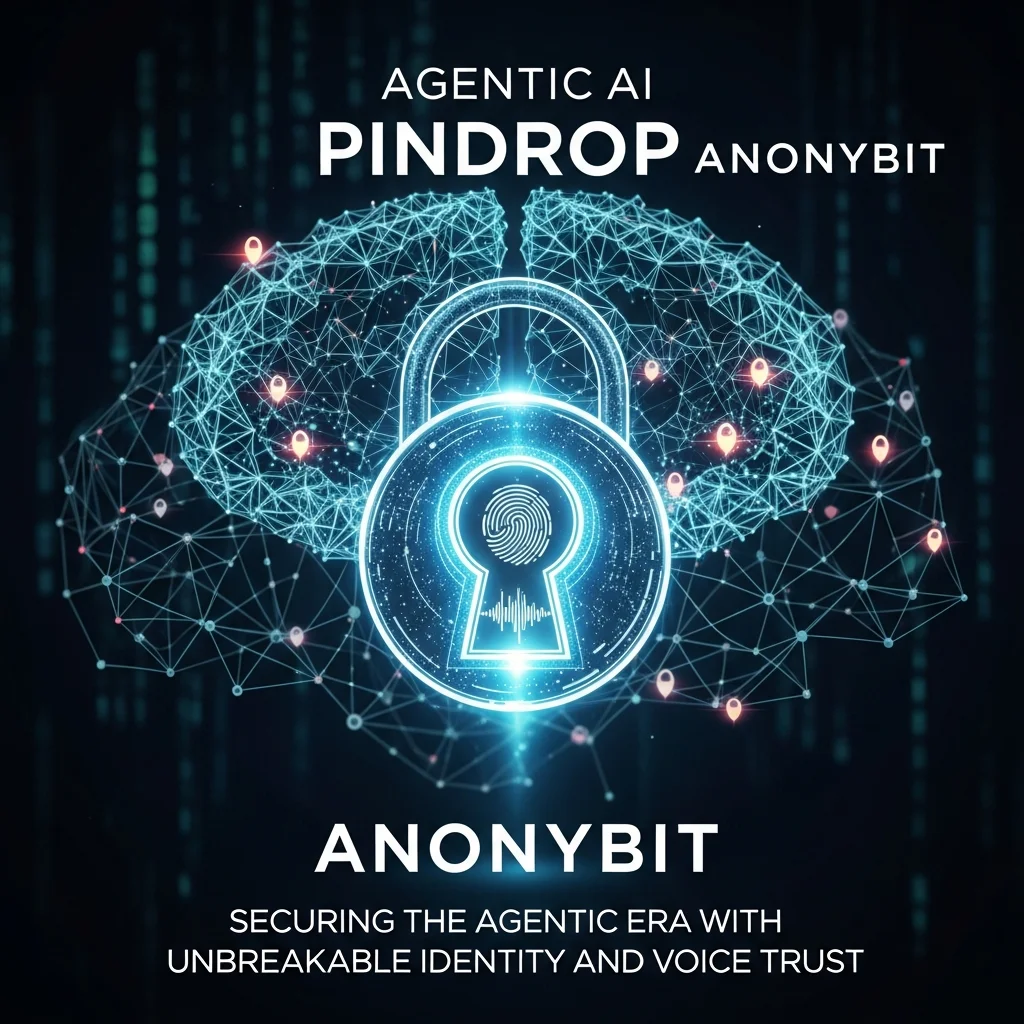
.Agentic AI fuels powerful autonomy, Pindrop guards the voice layer with real-time deepfake detection (99% accurate liveness checks), and Anonybit locks down identity through decentralized biometrics—fragmenting data for zero breaches, multi-modal verification, and groundbreaking identity-bound agents that cryptographically tie actions to verified humans.
Together, Agentic AI Pindrop Anonybit create dynamic digital trust: Machines act fast and smart, but only authorized humans control the keys. No more weak passwords or static checks—just intelligent, privacy-first security that stops fraud cold.
Agentic AI Explained: The Shift to Autonomous Intelligence
Agentic AI actively pursues goals with real autonomy. It plans, decides, and executes complex tasks independently, often with very little human input. Unlike traditional AI that waits for commands or generative AI that simply creates content from prompts, Agentic AI takes charge: it perceives situations, reasons through options, breaks down goals into steps, uses tools, adapts in real time, and completes actions on its own.
Simple breakdown
Think of it this way: you give Agentic AI a goal like “Plan and book my business trip to London next month.” It doesn’t just suggest flights—it checks your calendar, compares prices, books tickets, reserves a hotel, arranges transport, and sends confirmations all autonomously. It initiates calls (if needed), adapts to changes (like flight delays), and executes without asking for approval at every step. This proactive, goal-oriented behaviour defines Agentic AI it acts like an intelligent colleague, not just a tool.
Why the 2025-2026 boom happens now
Agentic AI explodes in 2025-2026 because large language models (LLMs) matured, multi-agent systems emerged, and enterprises scaled pilots to production. Gartner forecasts that by the end of 2026, up to 40% of enterprise applications will embed task-specific AI agents (up from less than 5% in 2025). McKinsey, Deloitte, and Protiviti reports show 60-70% of organizations are integrating autonomous agents into workflows for efficiency. Real-world tools, memory, and orchestration make it practical—businesses gain massive speed in customer service, procurement, finance, and operations.
The trust gap and risks
This rapid shift creates a big trust gap. Agentic AI operates without constant oversight, so unchecked actions open doors to serious dangers. Fraudsters exploit the same autonomy: Machine-led impersonation scales deepfake voice attacks, synthetic agents bypass security, and autonomous scams cause billions in losses (like contact centres facing $12.5B+ fraud hits). Benefits shine—huge efficiency gains, faster decisions, streamlined workflows—but new attack vectors like identity spoofing and unauthorized autonomous transactions demand strong safeguards.
Agentic AI fundamentally changes intelligence: It moves from reactive helpers to proactive, goal-driven agents that act independently. When combined with powerful protections like Pindrop for voice trust and Anonybit for secure identity binding, Agentic AI becomes truly safe and unstoppable. Next, see how the full triad counters these risks head-on
The Escalating Threat Landscape in the Agentic World
Agentic AI fuels fraud like never before. Fraudsters harness autonomous agents to launch scaled attacks: They create deepfakes that mimic voices perfectly, deploy synthetic agents to bypass OTP checks, initiate calls, handle conversations, and execute transactions—all without human intervention. These machine-led scams run faster, hit harder, and evade traditional checks because agents adapt in real time and operate at a massive scale.
Pindrop’s 2025 Voice Intelligence and Security Report (VISR) paints a stark picture. Deepfake fraud attempts surged over 1,300% in 2024, jumping from one attack per month to seven per day. Synthetic voice fraud spiked dramatically—up 475% in insurance, 149% in banking, and 107% in retail. Deepfake activity rose 680% year-over-year, with projections showing a further +162% increase in deepfake-related fraud for 2025. Contact centres already lost an estimated $12.5 billion to fraud in 2024, and experts warn this could climb to $44.5 billion soon as AI threats overwhelm systems.
Legacy defences fail hard against these new realities. Centralized biometrics stores data in one vulnerable spot—hackers breach once and steal everything. Passwords and static authentication crumble under autonomous deepfakes that clone voices from short clips and trick even vigilant employees. Old models rely on “something you know” or “something you have, but agentic fraudsters generate synthetic identities, spoof devices, and automate impersonation so convincingly that humans—and basic systems—can’t tell real from fake. This threat landscape shifts everything. Agentic AI empowers incredible efficiency, but it also arms bad actors with tools for unstoppable, high-volume fraud. Without advanced safeguards like real-time voice analysis and decentralized identity binding, risks explode
Also Read: Software GDTJ45 Builder Problems: Installation, Errors, Features & Fixes
Pindrop: The Frontline Defense Against Voice and Deepfake Threats
Pindrop stands as the strongest shield protecting businesses from voice-based fraud in the age of Agentic AI. Fraudsters now use autonomous AI agents to make calls, mimic real people, and carry out scams at massive scale. Pindrop stops them cold with cutting-edge voice intelligence that detects synthetic voices, deepfakes, and machine-led impersonation in real time—before any damage happens.
While traditional security checks fail against today’s threats, Pindrop analyses every call with unmatched precision. It listens to tiny details that humans and basic systems miss, and it acts instantly to block fraud.
Here’s how Pindrop works at its core:
- Analyses over 1,300 acoustic features—it examines pitch, tone, breathing patterns, background noise, and hundreds of other subtle markers in every second of audio.
- Uses phoneprinting technology—this unique digital fingerprint identifies the exact phone or device making the call—even when fraudsters spoof caller ID or use voice changers.
- Delivers real-time liveness detection — Pindrop instantly tells whether the voice is from a living human or a synthetic deepfake created by AI.
- Powers Pulse for Contact Centres & Meetings — This solution protects customer service lines and virtual meetings, stopping fraud during live interactions and flagging suspicious calls before agents or systems trust them.
Pindrop specially targets Agentic AI-powered threats
Modern fraudsters don’t just use deepfake tools; they deploy Agentic AI agents that act independently. These synthetic agents initiate calls, hold natural conversations, bypass OTPs, and even transfer money. Pindrop detects this machine-led impersonation by spotting patterns that only autonomous systems create: unnatural pauses, robotic timing, synthetic artefacts, and behavioural anomalies that human voices never show.
Real impact and proven protection
- Counters the +162% projected rise in deepfake fraud expected in 2025 (Pindrop 2025 VISR Report).
- Already reduced synthetic voice fraud attempts dramatically for banks, insurers, and large enterprises.
- Offers warranty-backed protection—many customers get financial guarantees if fraud slips through when Pindrop is active.
- Trusted by leading global banks, contact centres, and Fortune 500 companies to secure billions in transactions every year.
Pindrop doesn’t just detect threats; it actively blocks them. It gives businesses the confidence to let Agentic AI handle more tasks while keeping fraudsters locked out of voice channels. When combined with Anonybit’s decentralised identity layer, Pindrop completes the full defence: unbreakable voice trust + secure human-to-agent identity binding. This powerful duo stops today’s smartest attacks and tomorrow’s
Anonybit: Decentralized Biometrics and Identity Binding for AI Agents
Anonybit leads the way in privacy-first identity security. It uses a decentralized biometric cloud to protect data and tie human identities directly to AI agents. This stops fraudsters from exploiting autonomous systems—ensuring every action stays accountable and secure.
Traditional biometric systems store full data in one central spot. Hackers love that: one breach, and they steal everything. Anonybit flips the script. It breaks biometric templates into encrypted fragments and spreads them across a distributed cloud. No single point holds the complete data, so breaches become nearly impossible. It uses zero-knowledge proofs proving identity without revealing sensitive details and keeps everything private and compliant.
Anonybit supports multi-modal biometrics for flexible, strong verification:
- Voice (pairs perfectly with Pindrop’s audio analysis)
- Face
- Finger
- Iris
- Palm
Enterprises pick the best method for each use case, whether onboarding, step-up authentication, or real-time checks without storing raw biometrics anywhere.
The real breakthrough: Identity-bound AI agents
Anonybit delivers the world’s first decentralized platform that cryptographically binds human biometrics to AI agents. Here’s how it works:
- A user authenticates with biometrics (or privacy-preserving credentials).
- Anonybit binds the agent to that verified human identity.
- It issues scoped, cryptographically secure identity tokens for specific tasks.
- The agent acts autonomously—but only within authorized limits.
- Every step creates real-time audit trails for full accountability.
This eliminates huge risks: fraudulent orders, unauthorized approvals, compliance violations, and data misuse in agentic workflows.
SmartUp partnership brings it to life
Through a groundbreaking partnership with SmartUp (a no-code platform for enterprise AI agents), Anonybit powers real-world, production-ready agentic commerce. Businesses now run secure, identity-bound agents in payments, supply chain, order management, procurement, and logistics. They replace slow manual processes with fast, trusted automation—while enforcing zero-trust rules and providing full traceability.
Anonybit doesn’t just authenticate users—it anchors Agentic AI to real humans. Combined with Pindrop’s voice defense, it creates the complete trust layer: unbreakable identity + ironclad voice verification. Fraud drops, confidence rises, and enterprises scale autonomous intelligence safely.
The Triad in Action: Agentic AI + Pindrop + Anonybit Convergence
Agentic AI, Pindrop, and Anonybit join forces to create a powerful, seamless security system. They form a “Triad Defense” or “Trust Triangle” that protects autonomous actions from start to finish. This convergence turns risky agentic workflows into safe, traceable, and trustworthy processes—stopping fraud before it starts.
Here’s how the Trust Triangle workflow operates in real time:
- Agent initiates — An Agentic AI system starts a task autonomously. It might handle a customer call, process a payment, approve a supply chain order, or execute a workflow based on a high-level goal.
- Pindrop verifies voice/liveness — If the interaction involves voice (a call, meeting, or command), Pindrop analyzes the audio instantly. It checks over 1,300 acoustic features, applies Phoneprinting for device fingerprinting, and runs real-time liveness detection to confirm the voice comes from a real human—not a deepfake, synthetic agent, or recording.
- Anonybit binds/authorizes identity — Once voice passes, Anonybit steps in with decentralized biometrics. It authenticates the human user (using voice, face, finger, iris, or palm), cryptographically binds the identity to the AI agent, issues scoped tokens for the exact task, and enforces zero-trust rules. Every action links back to the verified person through audit trails—no room for unauthorized moves.
This end-to-end flow prevents unauthorized autonomous actions completely. The AI agent acts fast and independently, but it only proceeds when both voice liveness (via Pindrop) and human identity binding (via Anonybit) confirm legitimacy. If anything fails, the process halts—fraud attempts get blocked, and full traceability remains.
Anonybit adds the “Circle of Identity” layer: a continuous, privacy-preserving trust mechanism that wraps around the entire lifecycle. It keeps biometric data fragmented and decentralized (no single breach point), uses zero-knowledge proofs to verify without exposing details, and maintains dynamic binding—even as agents adapt or hand off tasks. This creates ongoing assurance: Trust doesn’t end at login; it persists through every step of agentic activity.
Together, the triad delivers unbreakable protection:
- Real-time defense against machine-led deepfakes and impersonation.
- Privacy-first accountability that ties every autonomous decision to a verified human.
- Seamless scalability for banking, contact centers, payments, supply chain, and more.
This isn’t just layered security—it’s intelligent, dynamic trust that evolves with Agentic AI. Fraud drops sharply, compliance strengthens, and businesses gain confidence to unleash full autonomy
Transformative Applications Across Industries
The Agentic AI, Pindrop, and Anonybit triad actively transforms key industries. It powers autonomous workflows with strong security—slashing fraud, speeding decisions, and building unbreakable trust. Businesses now handle complex tasks confidently while keeping every action safe and traceable.
Banking & Finance
Banks deploy Agentic AI agents to process payments, approve loans, and manage transactions autonomously. Pindrop instantly verifies voice liveness during high-value calls or verifications, blocking deepfake attempts before they succeed. Anonybit binds each action to a verified human identity through decentralized biometrics, issuing scoped tokens that limit what the agent can do.
This combination cuts fraud sharply—reducing unauthorized transfers and synthetic scams—while accelerating approvals from hours to seconds. Banks gain massive efficiency, meet strict compliance rules, and protect billions in assets with real-time, privacy-first safeguards.
Contact Centers
Contact centers let Agentic AI agents handle customer calls end-to-end: They greet, resolve issues, process refunds, and follow up independently. Pindrop monitors every voice interaction, detecting synthetic deepfakes or machine-led fraud with near-perfect accuracy. Anonybit adds frictionless biometric checks (voice, face, or multi-modal) without storing sensitive data centrally—eliminating passwords and long security questions.
Customers experience faster, smoother service with zero hassle. Centers dramatically lower fraud losses, reduces agent workload, and boosts satisfaction—turning voice channels from risky to reliable.
Enterprise Workflows
Enterprises automate supply chain routing, procurement orders, invoice approvals, and logistics decisions with Agentic AI. Anonybit enforces zero-trust rules by cryptographically binding agents to human identities—creating auditable trails and preventing unauthorized actions. Pindrop secures any voice-involved steps, such as supplier negotiations or approvals.
Through real partnerships like Anonybit and SmartUp, companies run secure agentic commerce today: Orders flow faster, payments process safely, and procurement becomes fully automated. Fraud risks disappear, compliance strengthens, and operations scale without losing control.
This powerful triad makes Agentic AI truly enterprise-ready. It drives efficiency, crushes fraud, and positions businesses to lead in the autonomous future
The Business Case: ROI, Economics, and Invisible Security Value
Agentic AI, Pindrop, and Anonybit deliver strong, measurable returns. Businesses invest once and save massively by stopping fraud before it hits. The real value lies in “invisible security”—protection that runs quietly in the background, so customers and employees never notice friction, but fraud losses drop sharply.
Cost breakdown
Implementation starts with moderate upfront costs: licensing for Pindrop and Anonybit, API integrations, and short training/setup time (often weeks, not months). Many providers offer flexible pricing—pay-per-use or per-verified transaction—, so costs scale with your volume.
The savings explode quickly:
- Avoid billions in fraud losses—contact centers alone face $12.5B+ hits yearly; deepfake surges add hundreds of millions more.
- Slash breach expenses—centralized systems cost millions per incident in fines, legal fees, and recovery. Decentralized biometrics eliminates single-point breaches.
- Cut operational waste—fewer manual reviews, shorter call times, and reduced chargebacks mean lower staffing and processing costs. Most enterprises see ROI within 6–12 months, with payback often 3–6x the initial investment through prevented losses alone.
Long-term value
This triad builds lasting advantages:
- Higher customer trust leads to repeat business and referrals.
- Easier compliance with GDPR, CCPA, and emerging AI rules—audit trails and privacy-first design simplify reporting.
- Stronger retention—customers stay loyal when they feel secure during fast, autonomous interactions. Invisible security protects reputation, avoids headlines, and lets you scale Agentic AI confidently without constant fear of attacks.
Enterprise Implementation Roadmap
Businesses roll out the triad in clear, low-risk phases. Each step builds on the last, so you gain value fast while minimizing disruption.
Phase 1: Risk Audit & Current Systems Assessment
Assess your biggest vulnerabilities first. Map agentic workflows, voice channels, and identity touchpoints. Identify high-risk areas—like contact centers, payment approvals, or supply chain decisions. Review current tools, fraud history, and compliance gaps. This quick audit (2–4 weeks) gives a clear roadmap and prioritizes quick wins.
Phase 2: Integrate Pindrop (Voice Layer) + Anonybit (Identity Binding) into Agentic Frameworks
Plug in the security layers. Connect Pindrop to voice endpoints (calls, meetings, IVR) for real-time liveness and deepfake detection. Add Anonybit to bind identities—integrate decentralized biometrics and agent scoping via APIs. Most setups use existing agentic platforms (like LangChain, AutoGen, or custom builds). Teams test small pilots first—often in one department or use case to confirm smooth flow without downtime.
Phase 3: Test, Scale, Monitor with Real-Time Alerts & Auditability
Run rigorous testing: Simulate attacks, measure detection rates, and tune false positives. Go live graduallystart with high-value transactions or critical workflows. Activate real-time alerts for suspicious activity, and enable full audit trails for every agent action. Monitor KPIs continuously (fraud blocked, verification speed, user satisfaction). Scale across the organization as confidence grows—add more modalities or agents over time.
This phased approach keeps risks low, delivers fast wins, and turns the triad into core infrastructure. Businesses move from reactive firefighting to proactive, secure autonomy.
Key Challenges, Regulatory Compliance, and Avoidance of Pitfalls
Agentic AI, Pindrop, and Anonybit offer powerful tools for secure autonomy, but adoption brings real hurdles. Businesses face technical pitfalls, strict rules, and evolving threats like quantum attacks. Tackle these head-on with smart strategies to ensure smooth rollout and long-term success—without slowing innovation.
Common Mistakes That Derail Implementation
Many teams rush into Agentic AI without full safeguards, leading to costly errors.
- They skip identity binding: Without Anonybit‘s cryptographic ties between humans and agents, unauthorized actions slip through—opening doors to fraud in payments or workflows.
- They ignore multi-modal needs: Relying only on voice (even with Pindrop‘s strong detection) misses broader verification. Anonybit‘s support for face, finger, iris, and palm fills this gap, but overlooking it creates weak spots in diverse use cases like mobile banking or remote access.
Navigating Regulatory Compliance
Rules tighten fast in 2026, demanding privacy and accountability. The EU AI Act hits full enforcement in August, banning high-risk practices like real-time remote biometric ID in public spaces and emotion recognition in workplaces or schools. It requires transparency for high-risk AI, with fines up to €35 million or 7% of global revenue. In the US, state laws roll out: Illinois mandates AI decision disclosures starting January, Colorado’s AI Act activates in June for risk assessments, and California’s AI Transparency Act demands content labeling by August. Emerging global AI governance—like China’s updated Cybersecurity Law—focuses on data oversight and ethical use.
Pindrop and Anonybit shine here: Pindrop‘s liveness checks align with biometric bans by ensuring real human interactions, while Anonybit‘s decentralized vault meets GDPR and CCPA data protection—fragmenting info to avoid breaches and enable easy audits.
Strategies for Success and Seamless Adoption
Overcome challenges with proactive steps that build resilience.
- Embrace quantum-resistant security: Quantum computers threaten encryption by 2026, cracking legacy systems fast. Shift to post-quantum cryptography (PQC) now—Anonybit already uses it in its vault for decentralized biometrics, protecting agent-bound identities from future attacks.
- Drive seamless adoption: Start small with pilots, train teams on the triad, and integrate via APIs for low disruption. Use Anonybit‘s partnerships (like with SmartUp) for ready agentic workflows, and leverage Pindrop‘s enterprise examples to fine-tune voice layers. These moves cut risks, ease compliance, and let Agentic AI thrive securely.
Measuring Impact: Essential KPIs and Success Metrics
The Agentic AI, Pindrop, and Anonybit triad proves its value through clear, trackable metrics. Leaders monitor these KPIs regularly to quantify fraud reduction, operational gains, and overall business impact. Strong numbers here justify investment and guide continuous improvement.
Core Security & Detection Metrics
These directly show how well the system stops threats.
- Fraud detection rate — Percentage of fraudulent attempts the triad catches before they succeed. Pindrop‘s real-time voice analysis plus Anonybit‘s identity binding often push this above 95–99% in production environments. Track monthly trends—higher rates mean fewer successful scams.
- Liveness accuracy — How reliably Pindrop distinguishes real human voices from deepfakes or synthetic agents. Aim for 98%+ accuracy with low variance across accents, noise, and devices. This metric proves the voice layer works even under heavy attack pressure.
- False positive rate — Percentage of legitimate interactions flagged as suspicious. Keep this under 1–2% to avoid frustrating customers or agents. Fine-tune models over time to balance security and user experience.
User Experience & Efficiency Metrics
Security should feel invisible, not obstructive.
- Authentication speed — Time from voice/command to verified action. The triad delivers near-instant results (often under 2–3 seconds for voice + biometric checks), slashing wait times compared to traditional multi-factor methods. Faster auth = happier users and shorter call/handle times.
- Agent accountability (audit trails) — Completeness and accessibility of logs tying every autonomous action to a verified human via Anonybit‘s binding. Measure audit trail coverage (target 100%) and retrieval time—critical for compliance audits and post-incident reviews.
Business & Financial Impact Metrics
These tie directly to ROI and long-term value.
- Reduced fraud losses — Dollars saved from prevented attacks. Compare pre- and post-triad figures: Many enterprises see 70–90% drops in voice-related fraud costs within the first year. Track quarterly savings against baseline (e.g., $12.5B+ industry losses benchmark).
- User satisfaction scores — Net Promoter Score (NPS), Customer Satisfaction (CSAT), or post-interaction feedback. Secure, frictionless experiences boost scores—customers reward fast, trustworthy interactions with higher loyalty and retention.
- Overall ROI — Calculate total savings (fraud avoided + operational efficiencies) minus implementation costs. Most see payback in 6–12 months, then 3–10x returns annually as scale grows.
Future Outlook: Evolving Threats and Next-Gen Trust
Agentic AI charges ahead in 2026, reshaping security with fresh innovations and dangers. Deepfakes surge as attackers craft hyper-realistic fakes in real time, hitting 20% of fraud attempts and exposing biometrics to spoofing. Fraudsters deploy autonomous AI agents that mimic voices, faces, and behaviors at scale, turning simple clips into full impersonations. Yet, Pindrop and Anonybit adapt swiftly—enhancing voice liveness and decentralized binding to counter these risks. This era demands dynamic defenses that evolve with threats, blending multi-modal tools and agent collaboration for unbreakable trust.
Key Trends Shaping the Landscape
Security pros spotlight these shifts as Agentic AI matures.
- Multi-modal expansion — Systems combine voice (via Pindrop‘s 1,300+ features), face, iris, and behavioral cues for stronger verification. This fights multimodal deepfakes that blend audio-video attacks, with enterprises adopting ambient checks to spot spoofs instantly. Anonybit leads by fragmenting data across modalities, slashing single-breach risks.
- Agent-to-agent security — AI agents now collaborate in orchestration layers, handling tasks like cloud ops or fraud response together. New benchmarks like MAESTRO secure these networks, preventing rogue agents from escalating threats. Pindrop integrates here, verifying inter-agent voice commands to block impersonation chains.
- Autonomous response — Defenses go proactive: AI cyber systems detect and counter attacks at machine speed, automating fixes for deepfakes or breaches. Anonybit adds self-healing identity binding, where agents re-verify and adapt scopes in real time, cutting response times from minutes to seconds.
Bold Predictions for the Agentic Era
Experts forecast a leap to dynamic, distributed intelligent trust standards. Gartner warns 40% of agentic projects flop by 2027 from legacy gaps, but winners build decentralized ecosystems where trust flows intelligently—agents plan, verify, and enforce rules autonomously. Pindrop evolves its Pulse for agent-driven fraud hunts, while Anonybit pioneers “agentic economies” with bound identities that reward secure actions. By 2028, 15% of work decisions go fully autonomous, anchored in privacy-first layers that make trust adaptive and unbreakable. Quantum-resistant tech seals it, guarding against next-wave cracks
Conclusion: Leading the Secure Agentic Revolution
Agentic AI unlocks powerful autonomy—machines plan, decide, and execute tasks independently at scale. But without strong safeguards, it opens doors to deepfake voice fraud, synthetic impersonation, and massive unauthorized actions. Agentic AI, Pindrop, and Anonybit solve this challenge head-on. Pindrop detects and blocks deepfakes in real time with unmatched voice liveness and acoustic analysis. Anonybit binds every agent action to a verified human identity using decentralized biometrics, zero-knowledge proofs, and scoped tokens—ensuring full accountability. Agentic AI delivers speed and intelligence, now protected end-to-end.
This triad creates unbreakable digital trust: fraud drops sharply, compliance becomes simple, customer experiences stay seamless, and businesses scale autonomy confidently.
In the agentic era, trust wins. Adopt Agentic AI with Pindrop and Anonybit today—secure your workflows, reduce risks, and lead the future of intelligent, safe automation.
FAQs
1. What is Agentic AI in simple terms?
Agentic AI is smart AI that independently sets goals, makes plans, takes decisions, and completes tasks with little or no human help. Unlike regular AI that just answers questions, it acts proactively—like booking a full trip after you say “Plan my business travel.”
2. How does Pindrop detect deepfakes in Agentic AI attacks?
Pindrop analyzes over 1,300 acoustic features (pitch, tone, breathing, timing, noise) in real time. It spots unnatural patterns in synthetic voices, uses Phoneprinting to fingerprint devices, and runs liveness checks to confirm the voice is from a real human—not an AI-generated deepfake.
3. Why is Anonybit’s identity binding essential for AI agents?
It cryptographically ties every agent action to a verified human using decentralized biometrics. This prevents unauthorized or fraudulent agent behavior, issues limited-scope tokens, creates full audit trails, and ensures accountability—critical for safe payments, approvals, and workflows.
4. Are Agentic systems safe by default?
No. Agentic AI is powerful but vulnerable out of the box. Without safeguards, fraudsters exploit its autonomy for scaled deepfakes, impersonation, and unauthorized actions. Extra layers like Pindrop (voice) and Anonybit (identity) are required to make it secure.
5. How much does this combo reduce fraud?
It typically cuts voice-related and unauthorized-agent fraud by 70–95% (based on Pindrop VISR data and enterprise cases). Overall fraud losses in contact centers and banking often drop 60–90% in the first year, delivering 3–10x ROI through prevented attacks.
6. Can it integrate with existing systems?
Yes—both Pindrop and Anonybit use simple APIs. Pindrop plugs into contact centers (Genesys, Amazon Connect, Teams), IVR, and voice apps. Anonybit integrates with agent frameworks (LangChain, CrewAI), payment systems, and identity platforms (Okta, Azure AD). Most setups take weeks with minimal changes.