

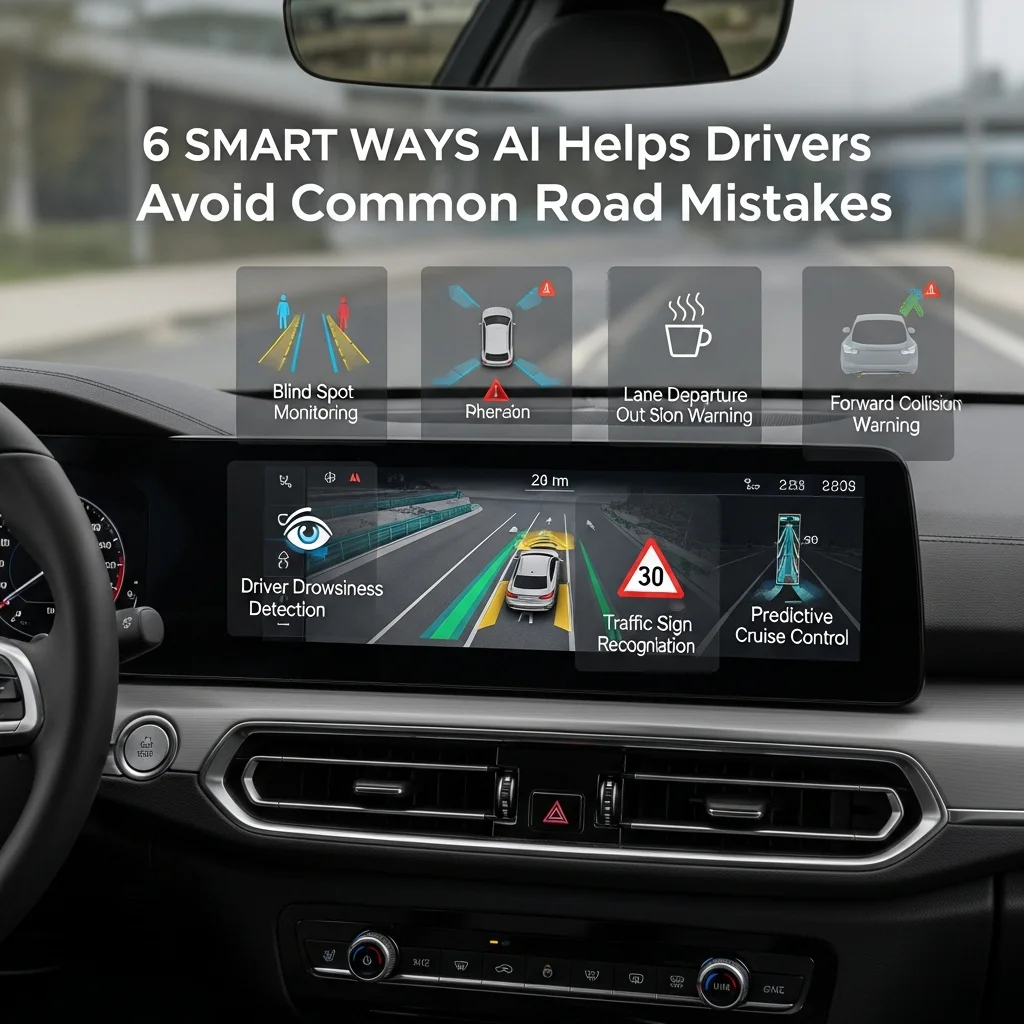
Driving has evolved dramatically in the last 10 years. With cars becoming intelligent companions on the road, and not simply mechanical machines, this is becoming more and more evident. A now common feature in new cars, artificial intelligence, or AI, is also helping make vehicles safer.
It is like a second pair of eyes for the driver. It analyzes data so quickly that no human could keep up. For UAE drivers, such assistance is priceless, especially on chaotic city roads and long highway journeys.
AI systems are about more than just avoiding crashes. They also track vehicle health, including variables that influence ride quality. Complex sensors, for example, can identify ageing tyres comfort loss subtle vibrations. So, they assist drivers in taking pre-emptive measures before these problems devastate the driving joy.
Why Human Driving Mistakes Are Still Common
Still, we’re only human, and human drivers do make mistakes. Fatigue, distraction, and bad decisions are the major cause of accidents worldwide. In the busy cities of the UAE, the visual input can be overstimulating.
Prolonged driving can result in drowsiness. A moment’s inattention is usually all it takes for an accident to occur. They can even get it wrong in a gap in traffic or braking distance, even if they have driven for a long time.
Technology is designed to compensate for these weaknesses in human attributes. You get a safety net that’s always on and never gets fatigued. When we understand what those errors are, we can better appreciate what assistance AI ultimately provides.
Everyday Errors Drivers Make on UAE Roads
Lane drift is a common phenomenon on wide roads. Drivers might check a navigation app or adjust the AC and make a small turn. This inadvertent movement poses dangers to everyone driving around them.
Slowing down too late is also a problem people have in stop and go traffic. Drivers tend to overestimate how far ahead a car is moving. This makes for sudden panic stop which can cause vehicle to crash from behind.
Similar complaints have been made about other road users, regarding their speed management over the kilometers. Pacing speed up without any reason !? disrupts flow of traffic :(!!). AI systems are smoothing these traits for a safer road environment.
How AI Assists Drivers in Real Time
AI in cars operates through a complex system of sensors, cameras and radars. These instruments are constantly sweeping the area and scanning around the vehicle. They are able to analyze risk and make decisions in milliseconds by feeding data into a central processor.
The system can then alert the driver or take action itself. Actions may include braking or tapping the steering wheel. This real time assistance is seamless and often goes unnoticed until it is needed.
It lets the driver relax, cognitively speaking. By taking over such monitoring responsibilities, AI frees the driver to concentrate on the road ahead. It changes the car from a passive device to an active safety partner.
1. AI Powered Lane Keeping and Steering Assistance
Lane Keeping Assist is one of the most obvious manifestations of AI. Windshield-mounted cameras monitor road markings in front of the vehicle. The AI is aware of the position of the vehicle between the lane markers.
If the car is drifting and the turn signal is on the system responds. That might be an audible warning or a vibration in the steering wheel. In sophisticated vehicles, it also nudges the car back into the center.
This option is especially convenient on the multi-lane highways of the Dubai. It eliminates sideswipe collisions induced by momentary distracted driving. It makes sure the car goes on a predictable path that other drivers can also follow.
Reducing Fatigue Related Steering Errors
The drive from Dubai to Abu Dhabi or Fujairah can be plain old boring. The long, straight stretches can put you into a “road-lock.” This will cause you to have mental fatigue which will cause you to steer sloppily and wander.
AI steering assist counters this by keeping the line dead straight. It also eliminates constant micro adjustments by the driver. This reduces the physical and mental strain significantly when driving long distances.
Centering the car makes the driver feel more reassured. The driving is easier, and less physically strenuous. This is a perfect example of technology making us more comfortable.
2. Predictive Braking and Collision Avoidance
Forward radar monitors the road ahead in forward collision warning systems. They can also really sense if traffic is slowing down more quickly than the driver is expecting. The AI uses the current speeds to calculate the time to impact.
Should a crash be imminent, the system will immediately warn the driver. If the driver does not react, the AI brakes can be activated automatically. It is known as Autonomous Emergency Braking – AEB.
AEB is really good in city environments where pedestrians or cars pop up out of nowhere. It responds more quickly than any human could through reflexes. This technology is being incorporated as standard on a majority of new cars in the UAE.
How AI Reduces Rear End Collisions
There are a number of reasons why rear-end crashes are so common in city traffic. They tend to occur when a driver glances away for a moment. AI never takes its eyes off, ensuring consistent reassurance.
The system reduces the severity of the crash by increasing the brake force in advance. In most cases it even stops the accident. The vehicle occupants are protected and so is the insurer.
It also eliminates the downstream impacts of such events including stop-and-go driving on the highway. Smooth traffic flow is a big plus for all of us. Smart braking is at the heart of today’s road safety.
3. Intelligent Speed and Traffic Monitoring
Parents can read speed limit signs functions like in-car cameras and modern vehicles can read speed limit signs! The artificial intelligence displays the current limit on your dashboard and tells you to comply. This prevents you from being fined for speeding on roads where limits are in flux.
Adaptive Cruise Control Level Two takes it a step further. It uses radar to lock onto the vehicle in front. The vehicle speed is adjusted automatically by the AI to keep a safe distance between two adjacent vehicles.
The car slows as the traffic slows. When traffic thins out, the car begins to pick up speed, approaching the set speed. This system controls speed with a human’s accuracy are hard-matched.
Avoiding Speed Misjudgement in Urban Dubai
Speed limits in Dubai are subject to change within areas. Overlook a sign and you risk a steep fine. AI sign recognition acts as a co-pilot.
The problem with ensuring safety on the road is, predict the speed of the other cars in traffic is very hard. AI analyzes flow to keep you moving just right. It helps deter you from rushing up on other cars.
This technology promotes smoother driving behavior, above all. It removes the aggressive accelerating and braking that leads to wasting fuel. It encourages even flow of traffic.
4. AI Monitoring Tyre Condition and Ride Comfort
Although safety is a given, AI has a part to play in vehicle upkeep. Rotor speeds and the vibrations of the tyres are monitored by contemporary sensors. This information enables the AI to recognize outliers that a driver may not perceive.
Problems such as uneven tyre wear or wheel imbalance produce particular vibration patterns, the report adds. AI can detect such patterns in advance, say the researchers. Detection is also important to keep the ride quality that drivers demand.
Early detection of these problems also means preventing the decay of tyre comfort caused by aging. Tyres transmit more noise and vibration as they age and soften. Carry alerts alert you when to check your tyres before your ride becomes unbearable.
How AI Helps Drivers Act Before Problems Get Worse
When the AI system indicates a tyre problem, you must take action. Early detection means planned, not emergency, maintenance. It allows the driver to explore the best replacement options.
Smart drivers are using those alerts to shop for bargains. Several are going to see tyre offers dubai to buy good replacements for Volkswagen cars. This is a money-saving, and at the same time it is a maximum safe.
The effect of poor tyre condition is a loss of grip and longer distances to stop. AI makes sure that the health of the tyres is not compromised. It closes a gap between the mechanical wear and the perceptual awareness of the driver.
5. Driver Attention and Fatigue Detection Systems
Several of the most sophisticated AI systems are focused on observing the driver and not the road. Internal cameras monitor eye movement and head direction. An alarm goes off if the driver is looking away from the road for too long.
It also examines drowsiness through steering angle. Jerky or inconsistent steering is a common way to spot a fatigued driver. The AI creates a baseline of the typical behavior of the driver and unique to that individual and then flags any deviations from the normal behavioral patterns.
When tiredness is detected, the car recommends a rest. It might also show a coffee cup icon on the dashboard display. This soft warning makes a driver reflect on his/her own alertness.
In the most extreme cases, some systems will even bring your car to a halt safely. This is the sort of technology crucial to stopping deaths from sleeping behind the wheel. It saves the driver from their own physical limits.
6. AI Guided Maintenance Alerts That Prevent Mistakes
Neglecting to service a vehicle is a widespread error. AI eliminates the guesswork from maintenance intervals. It tracks oil life, battery health and brake pad thickness live.
Instead of using a predetermined mileage label, the vehicle informs you when it needs attention. This is condition based servicing. It makes sure you do maintenance and inspections at the right time.
That’s because this prevents us from using the oil too long or the brakes too much. It is what makes the vehicle run at the “highest efficiency”. It’s a clever way to keep track of owning a car.
Avoiding Costly Errors Through Smart Maintenance Reminders
When you drive with faulty parts, the whole car takes a beating. Worn suspension components can rapidly destroy tyres. AI notifications have also started popping up to prevent such problems before they cause secondary damage.
As AI encourages repairs at appropriate time, it also minimizes repair costs from the perspective of Long Term. It prevents you from turning a small problem into a costly disaster. This helps to maintain the value of the vehicle over a period of time.
And it also back to the heart of comfort of the car. Good suspension also contributes to a smoother ride. AI keeps the driving experience premium.
Limits of AI and Why Driver Awareness Still Matters
AI is potent, but it’s not perfect. Sensors may be blocked by mud, heavy rain, or sand dust. Lane markings can be faded or covered, tricking the system.
None of us should become too dependent on technology.” The driver is always responsible for controlling the vehicle. AI is an assistive technology, not a substitute for human decision-making.
Situational awareness is another thing AI still has trouble with. Humans can also anticipate that a child could dart into the street. Only what it sees right now can AI react to.
So the safest system is an AI plus an alert driver. Leveraging technology to augment your skills makes for the safest environment possible. It’s a partnership between humans and machines.
FAQ’s
Can AI completely prevent driving mistakes?
No, AI helps drivers but it still requires their attention.
Are AI products beneficial in dealing with comfort related tyre problems?
Yes, because they enable early detection of pressure and wear.
Are AI safety features useful on UAE highways?
Yes, especially for long distance and high speed driving.
Do AI systems improve overall driving comfort?
Yes, by reducing stress and identifying corrections early.
Conclusion
AI is already changing the way we drive in the UAE. It makes our roads safer for all by reducing human error. From keeping us in our lanes to braking for us, the benefits are tangible.
AI also enhances the ownership experience beyond safety. It tracks vehicle health so problems such as ageing tyres or a loss of tyre comfort can be attended to swiftly. This kind of proactive monitoring makes cars run better, longer.
Drivers who adopt these technologies are less likely to make these common mistakes. It saves lives, saves money and cuts down on stress. As our cars get smarter, so too do our journeys, which are becoming safer and more fun.