Walk into any furniture store and you’ll notice something strange. A rug that looked perfect under showroom lights suddenly feels way too small once it reaches your home.That happens all the time.
Most homeowners don’t struggle with choosing colors or patterns. The real problem is scale. A rug can completely change how a room feels and the wrong size throws off everything around it.This is especially true with 12×15 area rugs. They make a huge impact when used correctly but can overwhelm a room if the layout is off by even a little.
And honestly this surprises many people because online rug guides usually oversimplify the process.The truth is there’s no single “correct” rug size. It depends on room dimensions furniture placement traffic flow and even ceiling height. What works beautifully in one living room can look awkward in another with the exact same square footage.
Here’s how to make sense of common rug sizes without wasting money on something that never quite feels right.
The Size Mistake Almost Everyone Makes
Most people buy rugs too small.Not slightly small. Dramatically small.A tiny rug floating in the middle of a room makes furniture look disconnected. It also makes the space feel cheaper even if the furniture itself is high quality.You’ve probably seen this before in living rooms where only the coffee table sits on the rug while every sofa leg stays outside it. The room instantly feels unfinished.
Larger rugs create visual structure. They anchor furniture instead of letting pieces feel scattered around the room.That’s why oversized options like 12×15 area rugs have become more popular in open floor plans and larger homes. They help define spaces without adding walls or dividers.
Smaller rugs still work of course. They just need to match the room’s purpose and layout.
What Looks Good vs. What Actually Works
A rug might look beautiful online. That doesn’t mean it works in your house.
Here’s the difference most homeowners discover too late:
- What looks good in product photos often uses oversized staging
- Real homes have walkways pets kids and awkward corners
- Furniture proportions matter more than rug design
Take dining rooms for example.
People often choose rugs based on table size alone. But chairs need room to slide out without catching the rug edge. If the rug is too tight guests constantly reposition chairs and the space becomes annoying to use.
Bedrooms create another common issue. A rug placed halfway under a bed can look balanced in photos but feel strange in real life because your feet land on cold flooring every morning.
Function changes everything.A rug should support how the room works not just how it photographs.
Why 8×10 Rugs Work in More Rooms Than You Think
There’s a reason 8×10 area rugs remain one of the most common sizes sold today.They’re flexible.Not too large. Not too small. Just adaptable enough for average-sized living rooms bedrooms and offices.
In living rooms an 8×10 rug usually works best when:
- Front legs of sofas sit on the rug
- The coffee table fully fits inside the rug area
- There’s still visible flooring around the edges
For queen bedrooms this size often extends nicely around the lower half of the bed without swallowing the entire floor.But here’s the catch.An 8×10 rug only works if the room itself supports it. In oversized living spaces it can suddenly look undersized especially with sectional sofas or wide furniture layouts.
That’s where homeowners start moving toward larger formats.
Stop Choosing Rugs by Color Alone
Color matters. But size changes the emotional feel of a room far more than pattern does.A properly sized neutral rug almost always looks better than a beautiful rug with poor proportions.Here’s the thing nobody tells you upfront.
Your eye reads the rug as part of the architecture. Not just décor.
Large rugs make rooms feel calmer because they visually connect furniture pieces together. Small rugs create fragmentation. The brain notices that imbalance even if you can’t immediately explain why the room feels “off.”
In open-plan homes especially rugs help organize visual zones:
- Living area
- Dining space
- Reading corner
- Workspace
Without enough rug coverage the entire floor can feel disconnected and empty.
This becomes especially important with hardwood or tile flooring where rugs soften the space both visually and physically.
The Living Room Formula That Usually Works
There’s no universal answer. But there are patterns interior designers follow repeatedly because they tend to work in real homes.
For living rooms:
- Small rooms often suit 5×8 or 6×9 rugs
- Medium rooms commonly fit 8×10 rugs
- Larger layouts usually benefit from 9×12 or 12×15 area rugs
The key is furniture contact.
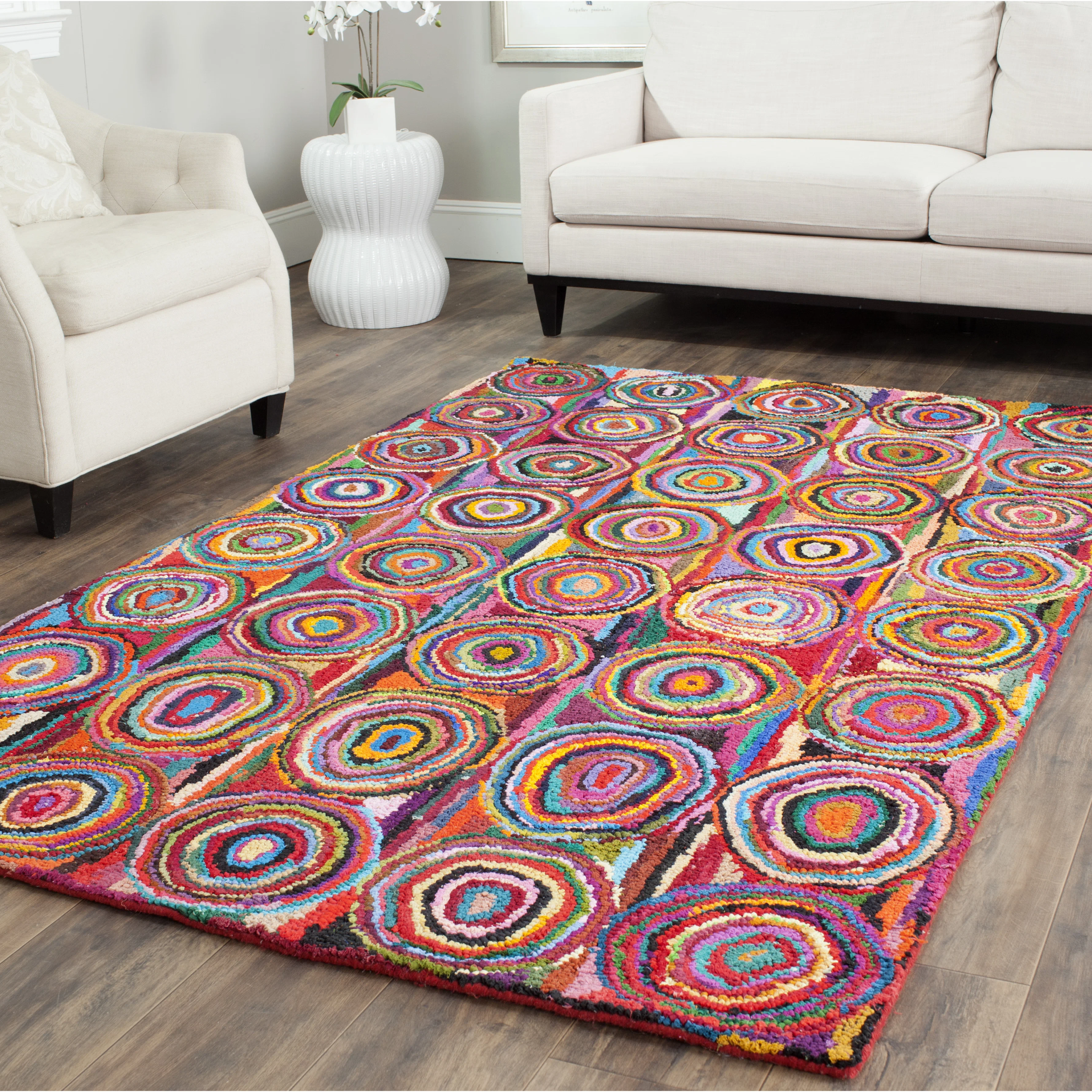
At minimum the front legs of major furniture pieces should rest on the rug. Fully floating furniture usually makes the space feel disconnected.In open-plan living rooms with sectionals oversized rugs often create the cleanest result because they define the seating zone clearly.
And yes bigger rugs cost more.But undersized rugs often create a more expensive problem because homeowners end up replacing them later after realizing the proportions never felt right.
Bedrooms Have Different Rules
Bedroom rugs behave differently than living room rugs.Comfort matters more here.Nobody enjoys stepping onto cold flooring first thing in the morning.For king beds a 9×12 rug typically creates balanced coverage around the sides and foot of the bed. Larger master suites may benefit from 12×15 area rugs especially when there’s additional seating or a bench area included in the layout.
Smaller bedrooms can still work beautifully with runners placed alongside the bed instead of one oversized rug.
Honestly this approach sometimes works better because it avoids overwhelming compact spaces.One mistake people make in bedrooms is centering the rug with the room instead of the bed itself. The bed should guide placement. Not the walls.
That single adjustment can completely change the balance of the space.
A Few Rug Myths That Need to Go
Some decorating advice refuses to die even though it causes more confusion than help.
“Leave equal floor space on all sides”
Sounds logical. Rarely works perfectly.
Rooms aren’t always symmetrical and furniture placement affects balance more than exact floor spacing.
“Bigger rugs always look better”
Not necessarily.A massive rug in a cramped room can make everything feel crowded. Scale still matters.
“You only need one rug per room”
Sometimes multiple smaller rugs create better function especially in multifunctional spaces.
“Patterns make rooms feel smaller”
Depends entirely on scale and contrast. Subtle patterned rugs can actually add depth without overwhelming the room.Most guides skip these nuances but they matter in real homes.
The Hidden Factor Homeowners Forget
Traffic flow.This changes everything.A rug may technically fit the room while still making movement awkward. Corners curl because people constantly step on edges. Dining chairs catch the border. Hallways suddenly feel narrower.
Before buying any rug size walk through the room mentally:
- Where do people naturally walk?
- Which furniture moves often?
- Are there pets or kids running through the space?
- Does the rug interrupt door clearance?
These practical details matter more than Pinterest-perfect styling.Especially in busy homes.Natural fiber rugs for example look beautiful in large spaces but may not hold up well in high-traffic family rooms with spills and pets. Plush rugs feel cozy but can trap dirt more easily in active households.Every rug choice involves tradeoffs.
Knowing them beforehand saves frustration later.
Bigger Rooms Need Visual Weight
Large rooms create a unique challenge. Furniture can start looking disconnected even when the pieces themselves are beautiful.That’s where oversized rugs become valuable.A large rug visually “grounds” the room. Without it furniture sometimes appears like separate islands floating across the floor.
This is why designers often recommend 12×15 area rugs in:
- Open-concept homes
- Large family rooms
- Spacious basements
- Formal living spaces
- Wide master suites
The rug acts almost like invisible architecture.And when done right the room instantly feels more intentional.Not staged. Not forced. Just balanced.
Conclusion
Choosing the right rug size is less about decorating rules and more about how a space feels when you actually live in it.A rug should make the room feel connected, comfortable and easier to use. If it only looks good in photos but creates awkward furniture spacing or poor traffic flow it’s probably the wrong size.Most homeowners focus heavily on color and pattern first. The smarter move is figuring out scale before anything else.Get the proportions right and even a simple rug can completely transform the room.
FAQs
Is a 12×15 rug too big for most living rooms?
Not always. In large open-plan homes or rooms with sectionals a 12×15 rug can actually create better balance than smaller options. It depends more on furniture layout than square footage alone.
Can 8×10 area rugs work under dining tables?
Yes if the dining room isn’t oversized. The important part is making sure chairs stay on the rug even when pulled out. That’s the detail many people forget.
Should all furniture legs sit on the rug?
Not necessarily. In many living rooms only the front legs need to rest on the rug. Fully floating furniture usually looks disconnected though.
Do darker rugs make rooms feel smaller?
Not automatically. A dark rug with the right size and texture can make a room feel grounded and cozy instead of cramped.
What’s the biggest mistake people make when buying rugs?
Buying too small. It happens constantly because homeowners underestimate how much floor coverage affects the overall feel of a room.